
Blog
GFRC vs Breeze Blocks: Which Concrete Jali Suits Your Karachi Project?

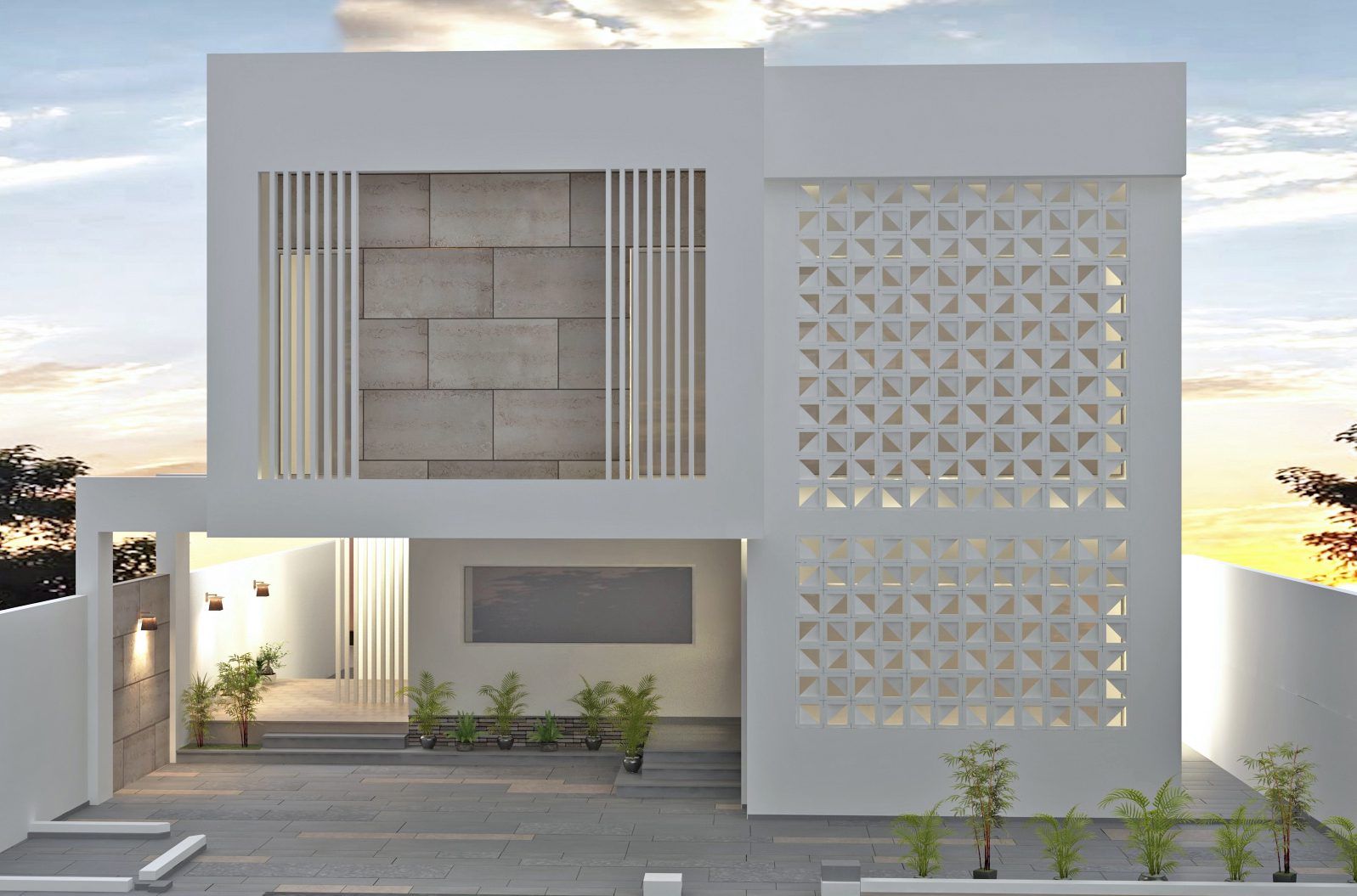
You want a screen that makes the space feel open, gives the facade some character and creates those lovely patterns of light across the floor. You’ve found two options that seem to do the same thing. Now comes the question: GFRC vs breeze blocks — which should you choose?
Both can create a concrete jali. But one is generally a panel system; the other uses individual modular blocks. That difference affects the pattern, layout, support, installation and quotation.
For a Karachi home, courtyard, restaurant or commercial frontage, start with the opening you want to screen. Then choose the product that fits the design and the way it will be built.
GFRC vs breeze blocks: the main difference
GFRC screen panels are made using glass-fibre-reinforced concrete. Cara Tiles’ GFRC netting range includes designs supplied in different panel formats, with dimensions that vary by product.
Breeze blocks are individual concrete units arranged to form a screen. The repeated block, the joints between units and the overall layout become part of the design.
Think of it this way: with panels, you’re planning how larger pieces fit into an opening. With blocks, you’re planning a composition built from smaller repeated units.
Neither is automatically the better option. The right choice depends on what your screen needs to do.
| Selection question | GFRC screen panels | Breeze blocks |
|---|---|---|
| How is the screen arranged? | Panels fitted to an appropriate support system | Individual units assembled into a supported screen |
| What shapes the appearance? | Panel pattern, dimensions, joints and layout | Block pattern, repetition, joints and layout |
| What should you measure? | Opening dimensions and proposed panel arrangement | Screen dimensions and proposed block arrangement |
| What needs installation planning? | Support, panel handling, fixings and joints | Support, setting-out, joints and assembly |
| What should the quote identify? | Selected panels, quantities and installation scope | Selected blocks, quantities and installation scope |
Explore the Cara Tiles GFRC range and breeze block designs side by side before deciding.
Choose the pattern for the space, not just the photograph
A jali can look completely different across a courtyard than it does on your phone.
Start with viewing distance. Will people see it from the road, sit next to it in a restaurant or walk past it in an entrance? A pattern that rewards a close look may read differently across a large facade.
Then look at the surrounding materials. If the elevation already has strong textures, a simpler screen may give the composition room to breathe. A restrained wall can carry a more expressive pattern.
In Cara Tiles’ GFRC range, Cubic, Half Cut and Mesh offer different geometric and organic compositions. The breeze block range includes designs such as Cube, Arrow and Vista. Similar names do not mean identical products: Cubic GFRC and Cube breeze blocks belong to different systems.
For a closer look at pattern selection, read our modern jali design guide.
Privacy, daylight and airflow: decide what matters most
“I want it open, but I also want privacy” is a very reasonable brief. It is also where the pattern needs a proper look.
Openings can allow light and air through a screen. How much reaches the space depends on the pattern, placement and surrounding building. Privacy depends on the angle of view as well as the openings themselves.
Before choosing a concrete jali, consider three everyday situations:
- From the street: Can someone see directly into the space?
- From inside: Does the screen give you the outlook and daylight you want?
- After dark: What happens when the room behind it is lit?
Ask to see a sample or a comparable installation. If privacy is important, discuss the sightlines with your architect. A decorative screen should not be assumed to provide complete visual privacy.
Panel size and block layout can change the whole design
A screen is not simply a pattern multiplied until the opening is full.
For GFRC netting, check the available panel dimensions for your chosen design. Discuss where the panel joints will fall and how edges meet the surrounding opening. A neat pattern can lose its effect if the layout ends awkwardly at a corner.
For concrete jali blocks, look at the unit size, joint arrangement and repetition. These affect the overall dimensions and quantity required.
Avoid ordering from a rough area measurement alone. Send the opening width and height, ideally with a drawing, so the supplier can review the layout and quantity assumptions.
For more background on the material, see our GFRC guide.
What to check before installing an exterior screen in Karachi
A screen beside an indoor seating area and one exposed on a building facade have different conditions to deal with.
Tell the supplier where it will sit: indoors, outdoors, partly covered or at height. Explain what structure is available to support it and whether the site has access constraints.
Ask your project team to confirm the supporting arrangement, fixing or assembly method, joints and handling requirements. An architectural screen should not be treated as a load-bearing wall. Where fall protection is required, its suitability needs a separate design review.
For exterior work, also discuss exposure, water management and the specification of any metal supports or fixings. Choosing the pattern is the enjoyable part; planning how it stays in place is just as important.
GFRC netting price or breeze blocks price: compare the complete quote
A material price alone will not tell you what the finished screen costs.
When requesting a GFRC netting price or breeze blocks quotation, provide the same project information for both options. Ask the supplier to explain what is included and excluded.
Useful quotation inputs include:
- Project location and access details.
- Opening width and height, or a dimensioned drawing.
- Preferred pattern, colour and finish.
- Number of openings or estimated quantity.
- Indoor or exterior application.
- Whether you need supply only or installation included.
Then check allowances for support, fixings or assembly materials, delivery, handling and any cutting or layout adjustments.
There is no reliable universal installed price for every screen. A like-for-like comparison starts with a clear scope. Send your project details to Cara Tiles for a quotation based on the actual requirement.
Can a concrete screen work with flexible wall cladding?
Yes, they can be considered within the same design, but they serve different roles. The screen creates openings and pattern; wall cladding provides a surface finish.
If your project includes a textured wall or curved feature alongside the jali, explore Cara FlexiClad separately. Confirm the suitability of the selected cladding for the intended surface and installation.
For a broader material palette, our house elevation guide brings the facade options into one conversation.
Five questions customers ask about GFRC and breeze blocks
Are GFRC and GRC the same thing?
The terms are commonly used for the same glass-fibre-reinforced concrete material family. When ordering, confirm the actual design, dimensions and product specifications.
Which is better for privacy: GFRC or breeze blocks?
Material name alone does not decide privacy. Compare the pattern, openings, depth, viewing angles and placement. Review a sample against your intended sightlines.
Can I use breeze blocks for a boundary screen?
They can be considered for supported boundary screening. Ask the technical team to review the screen height, layout and support requirements for your site.
Are GFRC screen panels suitable for an exterior facade?
They can be considered for architectural facade screening. Confirm the selected product, panel arrangement, exposure and fixing requirements with the supplier and project team.
What do I need for an accurate quotation?
Send your project location, opening dimensions or drawing, preferred product and contact details. Include the number of openings and whether installation is required.
Explore GFRC and breeze blocks at Cara Tiles in Karachi
Bring the opening, not just the inspiration picture.
A drawing, approximate dimensions and a few site photographs make it easier to compare a panel system with a modular block screen. The goal is a jali that fits the architecture and the way the space will be used.
Explore our GFRC screen panels and breeze blocks, or request project advice and a quotation.
Visit: Plot 32-C, Lane 9, Khayaban-e-Bukhari, DHA Phase 6, Karachi.
Call: 0309 3338619.
Share your project location, opening dimensions, preferred design and contact details so the discussion starts with your actual space.
One thought on “GFRC vs Breeze Blocks: Which Concrete Jali Suits Your Karachi Project?”