Blog
Exterior Wall Cladding in Pakistan: Types, Pros & the Best Options for Your Facade

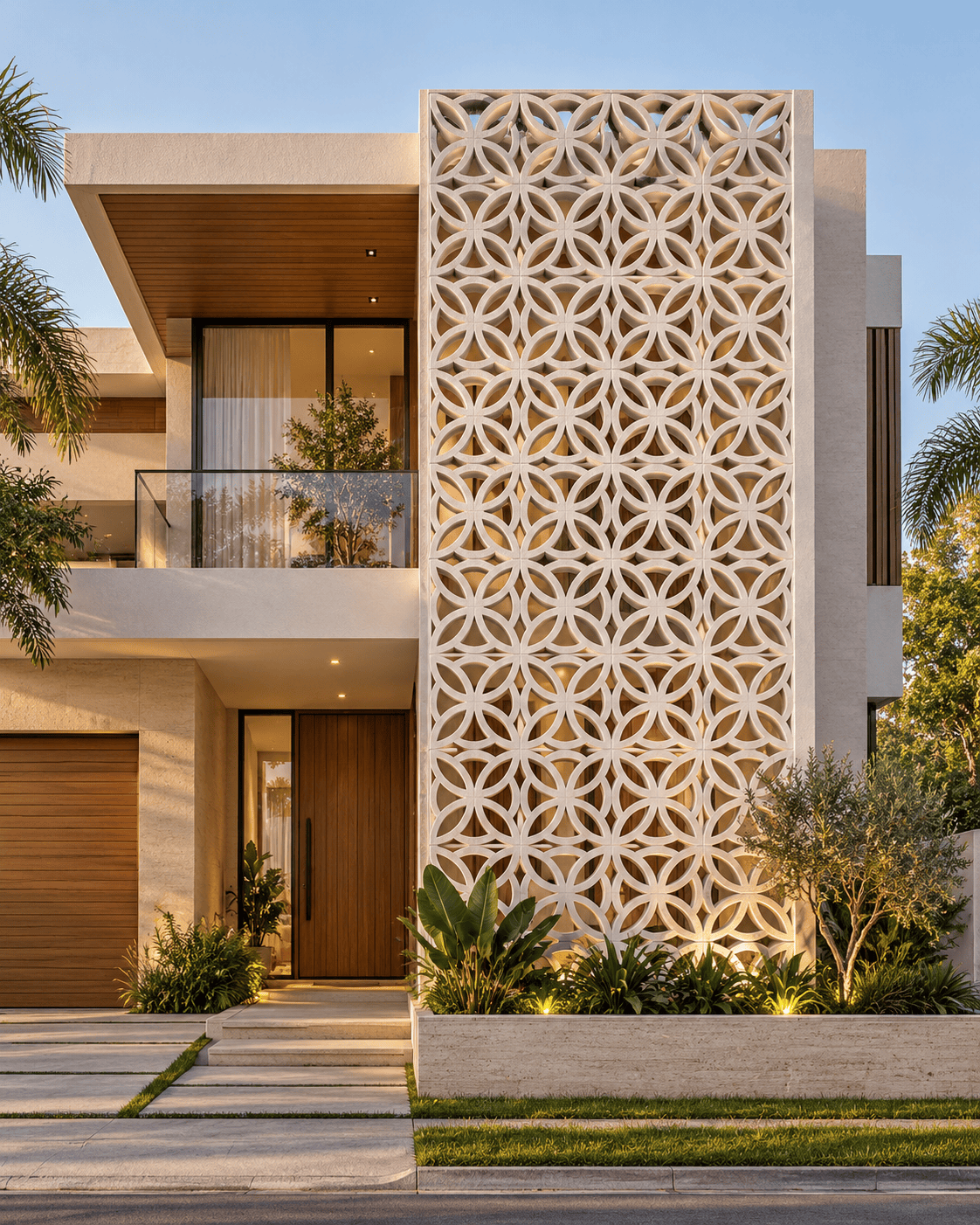
A building’s exterior is judged in seconds, but it has to survive decades of sun, monsoon rain and coastal humidity. That is why choosing the right exterior wall cladding in Pakistan matters as much as the design itself.
This guide compares the main cladding types, explains what to look for in Pakistani conditions, and shows where modern options like flexible stone cladding fit in.
What Is Exterior Wall Cladding?
Cladding is a protective and decorative skin applied over a building’s structural wall. Done well, it:
- Shields walls from rain, UV and temperature swings
- Adds texture, depth and character to a plain facade
- Can improve how a building handles heat and moisture
- Lets you change a building’s look without rebuilding it
If you are planning a full facade, our guide to house elevation design in Pakistan covers styles and materials in more depth.
Why Pakistan’s Climate Changes the Rules
Cladding that looks great in a catalogue can fail quickly if it isn’t built for local conditions. Before choosing, check how a material handles:
- Intense UV exposure. Cheap finishes fade and chalk in a few seasons.
- Monsoon moisture. Water absorption leads to staining, algae and cracking.
- Heat. Surface materials affect how much heat a wall absorbs. Pair your facade with a plan for roof heat proofing for a cooler building overall.
- Coastal humidity and salt, especially in Karachi.
- Installation speed. Heavy materials mean heavy labour, scaffolding and longer timelines.
5 Types of Exterior Cladding Compared
1. Natural Stone
Beautiful and prestigious, but heavy, expensive and slow to install. Natural variation also makes it hard to match batches across a large facade.
2. Paint and Textured Coatings
The cheapest option, but they need repainting regularly and can’t deliver real depth or texture.
3. Concrete and Elevation Tiles
A durable, widely used choice that suits flat surfaces and a clean architectural look. Explore elevation tiles for ready-made facade options.
4. GFRC (Glass Fiber Reinforced Concrete)
Strong, lightweight and highly customisable, GFRC suits screens, rafters and sculptural facade elements. Read more in Benefits of GFRC for Modern Construction, or browse GFRC netting and GFRC rafters.
5. Flexible Stone-Based Cladding
This is the newest category, and the one changing how architects approach feature walls. Thin, stone-textured panels give the look of real stone without the weight, and they can follow curves that rigid materials can’t.
Why Flexible Cladding Is Gaining Ground
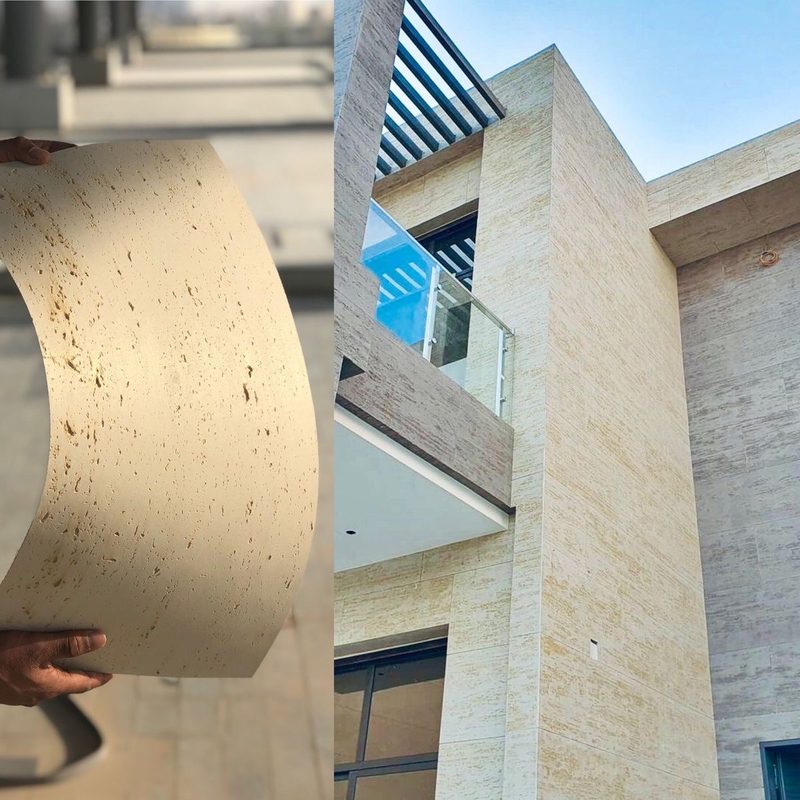
Cara FlexiClad was introduced as Pakistan’s first flexible stone-based cladding system. The panels are:
- Water-resistant, suited to rain-exposed facades
- Fire-resistant
- Break-proof, so they are tougher to handle on site
- UV-resistant, which helps colour hold up in strong sun
- Quick to install, which can shorten timelines
- Eco-friendly
The standout feature for designers is flexibility. FlexiClad bends to a diameter of up to 1 foot, which makes curved columns, rounded entrances and sweeping feature walls achievable without cutting and joining many small pieces.
Textures and Colours
The range covers a wide set of finishes, including Slot Line, Silk Line, Concrete Plank, Crater Cut, Flute, Prune, Chiseled Stone, Tetris, Cane and Travertine BM. Colours include Ivory, Grey, Charcoal, Sand Stone, Wash and Antique, so there is a look for modern minimalist homes, warm traditional elevations and commercial frontages alike.
For styling ideas, see Modern Styling with FlexiClad Solutions.
Don’t Forget Ventilation and Shade
Cladding works best as part of a facade system. Pairing it with breeze blocks adds airflow and filtered light, a classic climate response explored in our post on modern jali design ideas. A common combination is textured cladding on solid wall sections with a breeze block screen at balconies or stair cores.
How to Choose the Right Cladding: A Quick Checklist
- Surface shape: flat, curved or mixed? Curves favour flexible panels.
- Exposure: how much direct sun and rain does the wall get?
- Weight limits: can the structure carry heavy stone?
- Timeline: do you need fast installation?
- Maintenance: are you happy to repaint, or do you want a low-upkeep finish?
- Consistency: will you need matching batches across a large area?
- Supplier track record: ask for samples and completed projects.
Looking After Your Facade and Floors
Good materials last longer with basic care. Once the exterior is done, keep the rest of the property in shape with our tips on caring for floor tiles.
Final Thoughts
The best exterior cladding balances looks, climate performance and ease of installation. Natural stone offers prestige, paint offers a low upfront cost, and newer systems like flexible stone cladding and GFRC offer design freedom with less weight and faster installation.
Ready to explore options? Download the Cara Tiles catalogue, visit our Karachi showroom at Plot 32-C, Lane 9, Khayaban-e-Bukhari, DHA, or contact our team to request samples for your project. You can also call us on 0309 3338619.
Frequently Asked Questions
What is the best exterior wall cladding for Pakistan’s weather?
Look for materials that resist UV, water absorption and heat. Concrete-based and flexible stone-based systems are designed with these conditions in mind.
Can cladding be installed on curved walls?
Yes, with flexible cladding. FlexiClad bends to a diameter of up to 1 foot.
Is stone-look cladding as durable as natural stone?
Durability depends on the product. Check the manufacturer’s specifications for water, fire and UV resistance, and ask to see samples.
Where can I see Cara Tiles products?
Visit the Cara Tiles homepage or browse the full product range.