
Blog
7 Modern Breeze Block Boundary Wall Ideas for Homes in Pakistan

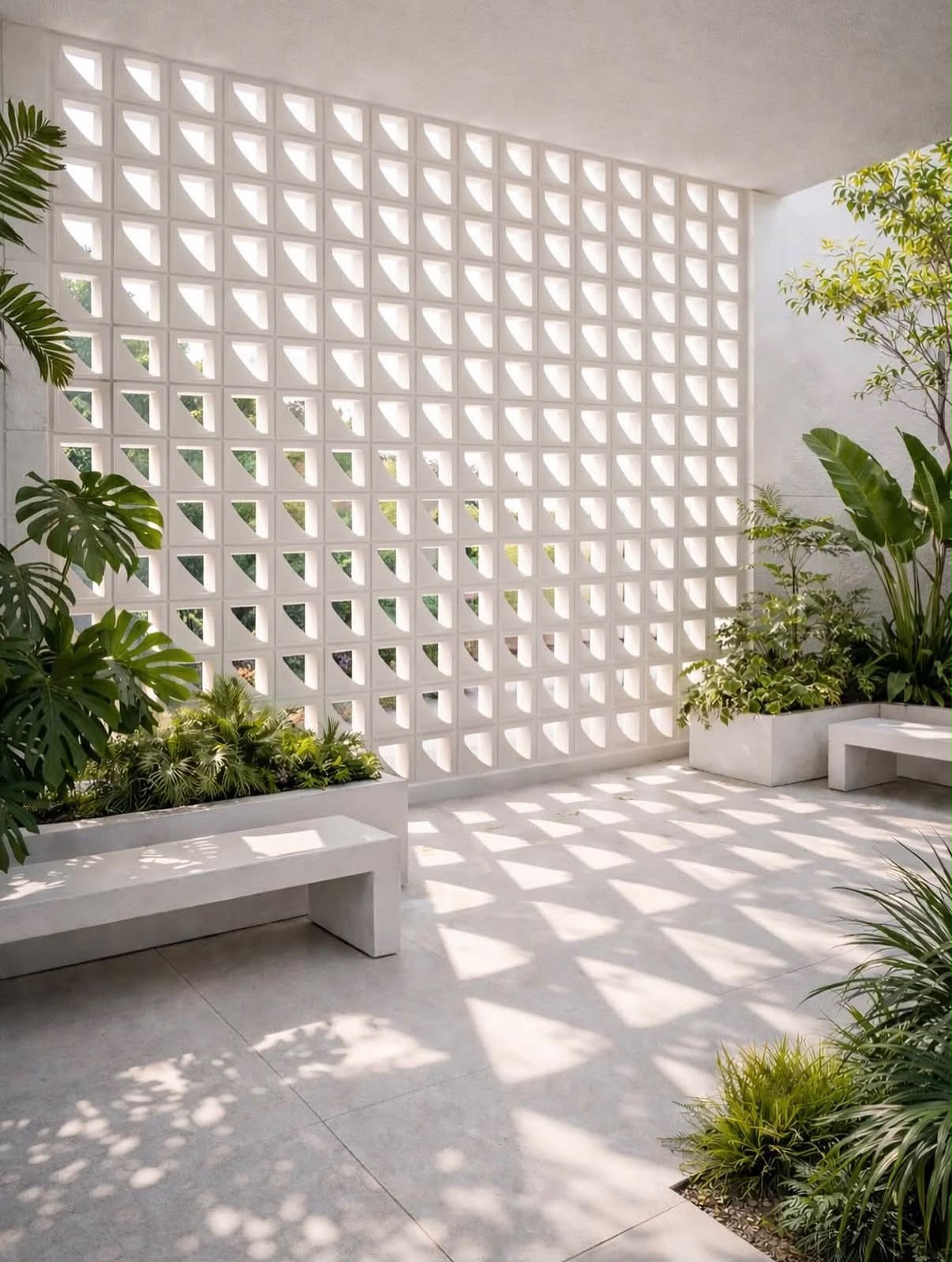
A boundary wall is supposed to give your home privacy. But who decided it also had to make your house look like a fortress?
In Pakistan, boundary wall design often comes down to a solid stretch of concrete, a coat of paint and perhaps a decorative grille. It works, but it doesn’t always do much for the architecture.
What if your boundary wall could offer privacy, allow air to circulate, introduce natural light and actually become one of the most interesting parts of your home’s exterior?
That’s where breeze block boundary walls come in.
Also known as concrete jali blocks or ventilation blocks, these architectural elements introduce pattern, texture and carefully positioned openings into a wall. From modern Karachi homes to landscaped courtyards, they offer possibilities that ordinary solid masonry simply doesn’t.
And the best part? You don’t have to redesign your entire house to introduce them.
Here’s how to make a boundary wall more interesting, functional and distinctly yours.
Why Are Breeze Block Boundary Walls Becoming a Modern Design Choice?
Think about the exterior of a house. Before anyone sees the living room, the staircase or the beautifully designed kitchen, they encounter the boundary wall.
It’s often the first architectural impression a home makes.
Traditional solid walls provide enclosure, but a breeze block screen can introduce another dimension: the relationship between indoor and outdoor space.
Depending on its pattern, position and surrounding structure, a concrete jali screen can:
- Allow natural ventilation through selected openings.
- Filter daylight and create interesting shadow patterns.
- Provide varying degrees of visual privacy.
- Introduce architectural texture without excessive ornamentation.
- Complement contemporary, traditional and minimalist house elevations.
In cities such as Karachi, where airflow, strong sunlight and privacy are everyday architectural considerations, these characteristics can be especially useful.
However, breeze blocks are architectural screening elements, not substitutes for a properly engineered structural boundary wall or security barrier.
Explore the Cara Tiles Breeze Block collection to see how different patterns can change the appearance of an exterior.
7 Breeze Block Boundary Wall Design Ideas Worth Exploring
1. The Half-Solid, Half-Open Boundary Wall
Best for: Modern homes that want privacy without a completely enclosed appearance.
Imagine a solid lower boundary wall topped with a beautifully arranged section of concrete jali.
The lower portion provides enclosure, while the upper breeze block section introduces texture, filtered views and opportunities for airflow.
For this approach, the Cube Breeze Block offers a clean, geometric appearance that works particularly well with simple architectural elevations.
The result can feel sophisticated without needing elaborate decoration.
Design tip: Keep the lower wall in a neutral finish and let the repeating openings above become the feature. Have the supporting structure and connections designed for the full wall height.
2. A Statement Entrance That Makes the Boundary Wall Part of the Architecture
Best for: Front elevations, pedestrian entrances and modern residential projects.
Your main gate doesn’t have to be the only interesting element at the entrance.
A framed section of decorative concrete jali beside the gate can give the entire frontage a more considered appearance.
The Vista Breeze Block uses layered geometric openings that create visual depth and intricate patterns.
Pair it with a restrained gate design, textured concrete and warm architectural lighting for an entrance that feels contemporary without becoming visually overwhelming.
Just remember that an illuminated entrance changes privacy conditions after dark. Check sightlines from the street before finalising the pattern.
3. A Garden Boundary Wall That Feels Connected to Nature
Best for: Courtyards, landscaped boundaries, patios and outdoor seating areas.
There is something particularly appealing about sunlight passing through a patterned wall and falling across leaves, planters or a garden floor.
Instead of treating the boundary as the end of the landscape, make it part of the garden design.
The Leaf Breeze Block introduces an organic motif that complements greenery, while the Tulip Breeze Block offers a softer, sculptural alternative.
Both can be considered for a supported screen beside a courtyard or garden seating area.
Design tip: Use planting to soften the transition between concrete and landscape, but leave enough access for cleaning, drainage and maintenance.
4. A Geometric Car Porch Screen
Best for: Car porches, side entrances and covered exterior areas.
A car porch needs to feel practical. But practical doesn’t have to mean completely plain.
A breeze block screen along a selected side of the porch can introduce daylight, openness and architectural rhythm without leaving the entire space visually exposed.
Consider the Arrow Breeze Block for its distinctive triangular geometry.
Its repeated angular forms can work particularly well alongside straight rooflines, contemporary gates and minimal exterior finishes.
Airflow will depend on the surrounding openings and building layout, so placement matters as much as the block design.
5. A More Private Side Passage or Courtyard
Best for: Side passages, internal courtyards and residential screens overlooking neighbouring properties.
Privacy is one of the most common concerns in Pakistani homes, especially where houses sit close together.
But complete enclosure isn’t always the only answer.
A carefully positioned jali screen can interrupt direct views while preserving some connection to the outdoors.
For a more layered geometric appearance, consider the Cork Breeze Block.
The important part is not simply choosing a pattern with smaller openings. It’s understanding the actual viewing angle.
An opening that conceals a space from one position may still offer a clear view from another.
Before installation, test the proposed pattern at eye level from both sides, including when interior or courtyard lights are switched on.
6. A Two-Tone Concrete Jali Feature Wall
Best for: Minimalist elevations that need visual contrast.
Sometimes the most interesting design decision isn’t changing the material. It’s changing how that material is arranged.
A breeze block wall using contrasting finishes can become a striking architectural feature.
Imagine a repeating geometric screen combining ivory and charcoal blocks, with the pattern becoming visible through subtle changes in tone.
The Box Breeze Block is a useful design to explore for this approach.
You can keep the arrangement consistent, introduce a controlled alternating pattern or create a distinctive framed feature section.
The idea is simple: let geometry and repetition do the decorative work.
Ask about the available colour and finish options for the selected product before finalising your elevation.
7. A Ventilated Utility or Service-Area Screen
Best for: Utility courtyards, semi-outdoor kitchens and selected service-area enclosures.
Not every boundary screen is about making a dramatic architectural statement.
Sometimes you need a practical opening that lets air pass through while helping to limit insect entry.
Cara Tiles offers Mesh Breeze Blocks featuring integrated food-grade stainless steel mesh.
These blocks can be considered for appropriately designed utility areas, service spaces and semi-outdoor enclosures where ventilated screening is useful.
The integrated mesh provides an additional barrier, although actual insect exclusion, airflow and maintenance depend on the full installation, including joints and adjacent openings.
It is a thoughtful example of how architectural concrete can address an everyday building requirement.
What Makes a Good Breeze Block Boundary Wall Design in Pakistan?
A beautiful design on Pinterest isn’t necessarily the right design for your house.
Before choosing your concrete jali pattern, consider four things.
Privacy: What Should People Be Able to See?
The size, shape and depth of the openings influence visibility.
An open geometric pattern might work beautifully around a garden but may not provide the privacy required beside a bedroom window.
Consider both daytime and nighttime sightlines.
Ventilation: Where Can Air Actually Move?
Breeze blocks create openings for airflow, but ventilation depends on the overall layout of the building.
A perforated screen cannot create effective cross-ventilation if the surrounding space has no suitable air path.
Placement, wind direction and adjacent structures all matter.
Sunlight: Do You Want Shade or More Daylight?
Different patterns cast different shadows.
A screen that receives direct sunlight can create beautiful changing patterns throughout the day. The amount of shading depends on the opening geometry and orientation.
For west-facing areas exposed to intense afternoon sun, discuss the proposed screen position with your architect.
Structure: How Will the Screen Be Supported?
A breeze block screen should be designed as a supported, non-load-bearing architectural element.
Its height, width, framing, foundations, reinforcement where specified and connections must be reviewed by the project team.
For exposed boundary locations, wind loading, stability, security and any local authority requirements also need consideration.
A visually open boundary is not automatically a secure perimeter.
What Size Are Concrete Breeze Blocks?
Cara Tiles’ standard modular breeze block range includes units measuring 8 inches × 8 inches × 100 mm.
This consistent module provides a starting point for arranging repeated patterns across a screen.
However, the nominal block dimensions are not the same as the final installed module, because joints, supporting elements and edge details affect the completed measurements.
Before ordering, establish the exact opening dimensions and have the proposed block layout checked.
For more design inspiration, explore Cara Tiles’ Modern Jali Design Ideas for Homes and Building Elevations.
Breeze Blocks Price in Pakistan: What Determines the Cost?
If you’re searching for breeze blocks prices in Pakistan, it’s worth understanding that the block itself is only one part of the project.
The final cost of a breeze block boundary screen depends on the selected design, quantity, finish and installation requirements.
A complete quotation may need to account for material quantities, structural supports, mortar or fixing materials, edge detailing, labour, delivery and site access.
A small decorative section beside an entrance will have a different project scope from a large boundary screen.
Rather than relying on an unverified generic market rate, request an estimate based on your actual wall dimensions.
You can contact Cara Tiles for a project quotation and share your site location, approximate screen dimensions and preferred design.
Frequently Asked Questions About Breeze Block Boundary Walls
Are breeze blocks suitable for exterior boundary walls?
Breeze blocks can be used as architectural screening elements within appropriately designed exterior boundary arrangements. The supporting structure, exposure, screen dimensions and safety requirements must be reviewed before installation.
Do concrete jali blocks provide complete privacy?
No. Privacy varies depending on the pattern, opening size, depth, orientation and viewing angle. A sample or mock-up can help you understand how much visibility remains.
Can breeze blocks improve airflow in a house?
Their openings allow air to pass through, making them useful where a design calls for ventilated screening. The actual ventilation benefit depends on the building layout and the available air paths.
Are breeze blocks and GFRC jali panels the same?
No. Breeze blocks are individual precast concrete units arranged into modular screens. GFRC screens are glass-fibre-reinforced concrete panels, often used for more intricate or larger-format architectural elements.
If you’re choosing between them, read our guide to GFRC vs Breeze Blocks for architectural screening.
How do I choose the right breeze block design?
Begin with the intended location, privacy needs, orientation, available opening dimensions and architectural style. Then compare actual samples and discuss the required support and installation details with the supplier and architect.
Design a Boundary Wall That Belongs to Your Home
A boundary wall doesn’t have to be an afterthought.
It can be the first expression of a home’s architectural character—a surface that introduces geometry, frames sunlight, complements landscaping and creates a more interesting relationship between inside and outside.
Whether you’re planning a contemporary home in Karachi, renovating a courtyard or exploring concrete jali designs for a new residential project, the right material choice begins with understanding your space.
At Cara Tiles, we manufacture architectural concrete solutions including Breeze Blocks, GFRC screens, Concrete Netting, FlexiClad and exterior surface products for a range of design applications.
Explore our Breeze Block designs or get in touch with Cara Tiles to discuss your next project.
Visit our showroom: Plot 32-C, Lane 9, Khayaban-e-Bukhari, DHA Phase 6, Karachi.
Call: 0309 3338619
Website: www.caratiles.com
Have a boundary wall in mind? Share your project location, approximate wall dimensions, preferred pattern and contact details with 7 Modern Breeze Block Boundary Wall Ideas for Homes in Pakistan
A boundary wall is supposed to give your home privacy. But who decided it also had to make your house look like a fortress?
In Pakistan, boundary wall design often comes down to a solid stretch of concrete, a coat of paint and perhaps a decorative grille. It works, but it doesn’t always do much for the architecture.
What if your boundary wall could offer privacy, allow air to circulate, introduce natural light and actually become one of the most interesting parts of your home’s exterior?
That’s where breeze block boundary walls come in.
Also known as concrete jali blocks or ventilation blocks, these architectural elements introduce pattern, texture and carefully positioned openings into a wall. From modern Karachi homes to landscaped courtyards, they offer possibilities that ordinary solid masonry simply doesn’t.
And the best part? You don’t have to redesign your entire house to introduce them.
Here’s how to make a boundary wall more interesting, functional and distinctly yours.
Why Are Breeze Block Boundary Walls Becoming a Modern Design Choice?
Think about the exterior of a house. Before anyone sees the living room, the staircase or the beautifully designed kitchen, they encounter the boundary wall.
It’s often the first architectural impression a home makes.
Traditional solid walls provide enclosure, but a breeze block screen can introduce another dimension: the relationship between indoor and outdoor space.
Depending on its pattern, position and surrounding structure, a concrete jali screen can:
Allow natural ventilation through selected openings.
Filter daylight and create interesting shadow patterns.
Provide varying degrees of visual privacy.
Introduce architectural texture without excessive ornamentation.
Complement contemporary, traditional and minimalist house elevations.
In cities such as Karachi, where airflow, strong sunlight and privacy are everyday architectural considerations, these characteristics can be especially useful.
However, breeze blocks are architectural screening elements, not substitutes for a properly engineered structural boundary wall or security barrier.
Explore the Cara Tiles Breeze Block collection to see how different patterns can change the appearance of an exterior.
7 Breeze Block Boundary Wall Design Ideas Worth Exploring
1. The Half-Solid, Half-Open Boundary Wall
Best for: Modern homes that want privacy without a completely enclosed appearance.
Imagine a solid lower boundary wall topped with a beautifully arranged section of concrete jali.
The lower portion provides enclosure, while the upper breeze block section introduces texture, filtered views and opportunities for airflow.
For this approach, the Cube Breeze Block offers a clean, geometric appearance that works particularly well with simple architectural elevations.
The result can feel sophisticated without needing elaborate decoration.
Design tip: Keep the lower wall in a neutral finish and let the repeating openings above become the feature. Have the supporting structure and connections designed for the full wall height.
2. A Statement Entrance That Makes the Boundary Wall Part of the Architecture
Best for: Front elevations, pedestrian entrances and modern residential projects.
Your main gate doesn’t have to be the only interesting element at the entrance.
A framed section of decorative concrete jali beside the gate can give the entire frontage a more considered appearance.
The Vista Breeze Block uses layered geometric openings that create visual depth and intricate patterns.
Pair it with a restrained gate design, textured concrete and warm architectural lighting for an entrance that feels contemporary without becoming visually overwhelming.
Just remember that an illuminated entrance changes privacy conditions after dark. Check sightlines from the street before finalising the pattern.
3. A Garden Boundary Wall That Feels Connected to Nature
Best for: Courtyards, landscaped boundaries, patios and outdoor seating areas.
There is something particularly appealing about sunlight passing through a patterned wall and falling across leaves, planters or a garden floor.
Instead of treating the boundary as the end of the landscape, make it part of the garden design.
The Leaf Breeze Block introduces an organic motif that complements greenery, while the Tulip Breeze Block offers a softer, sculptural alternative.
Both can be considered for a supported screen beside a courtyard or garden seating area.
Design tip: Use planting to soften the transition between concrete and landscape, but leave enough access for cleaning, drainage and maintenance.
4. A Geometric Car Porch Screen
Best for: Car porches, side entrances and covered exterior areas.
A car porch needs to feel practical. But practical doesn’t have to mean completely plain.
A breeze block screen along a selected side of the porch can introduce daylight, openness and architectural rhythm without leaving the entire space visually exposed.
Consider the Arrow Breeze Block for its distinctive triangular geometry.
Its repeated angular forms can work particularly well alongside straight rooflines, contemporary gates and minimal exterior finishes.
Airflow will depend on the surrounding openings and building layout, so placement matters as much as the block design.
5. A More Private Side Passage or Courtyard
Best for: Side passages, internal courtyards and residential screens overlooking neighbouring properties.
Privacy is one of the most common concerns in Pakistani homes, especially where houses sit close together.
But complete enclosure isn’t always the only answer.
A carefully positioned jali screen can interrupt direct views while preserving some connection to the outdoors.
For a more layered geometric appearance, consider the Cork Breeze Block.
The important part is not simply choosing a pattern with smaller openings. It’s understanding the actual viewing angle.
An opening that conceals a space from one position may still offer a clear view from another.
Before installation, test the proposed pattern at eye level from both sides, including when interior or courtyard lights are switched on.
6. A Two-Tone Concrete Jali Feature Wall
Best for: Minimalist elevations that need visual contrast.
Sometimes the most interesting design decision isn’t changing the material. It’s changing how that material is arranged.
A breeze block wall using contrasting finishes can become a striking architectural feature.
Imagine a repeating geometric screen combining ivory and charcoal blocks, with the pattern becoming visible through subtle changes in tone.
The Box Breeze Block is a useful design to explore for this approach.
You can keep the arrangement consistent, introduce a controlled alternating pattern or create a distinctive framed feature section.
The idea is simple: let geometry and repetition do the decorative work.
Ask about the available colour and finish options for the selected product before finalising your elevation.
7. A Ventilated Utility or Service-Area Screen
Best for: Utility courtyards, semi-outdoor kitchens and selected service-area enclosures.
Not every boundary screen is about making a dramatic architectural statement.
Sometimes you need a practical opening that lets air pass through while helping to limit insect entry.
Cara Tiles offers Mesh Breeze Blocks featuring integrated food-grade stainless steel mesh.
These blocks can be considered for appropriately designed utility areas, service spaces and semi-outdoor enclosures where ventilated screening is useful.
The integrated mesh provides an additional barrier, although actual insect exclusion, airflow and maintenance depend on the full installation, including joints and adjacent openings.
It is a thoughtful example of how architectural concrete can address an everyday building requirement.
What Makes a Good Breeze Block Boundary Wall Design in Pakistan?
A beautiful design on Pinterest isn’t necessarily the right design for your house.
Before choosing your concrete jali pattern, consider four things.
Privacy: What Should People Be Able to See?
The size, shape and depth of the openings influence visibility.
An open geometric pattern might work beautifully around a garden but may not provide the privacy required beside a bedroom window.
Consider both daytime and nighttime sightlines.
Ventilation: Where Can Air Actually Move?
Breeze blocks create openings for airflow, but ventilation depends on the overall layout of the building.
A perforated screen cannot create effective cross-ventilation if the surrounding space has no suitable air path.
Placement, wind direction and adjacent structures all matter.
Sunlight: Do You Want Shade or More Daylight?
Different patterns cast different shadows.
A screen that receives direct sunlight can create beautiful changing patterns throughout the day. The amount of shading depends on the opening geometry and orientation.
For west-facing areas exposed to intense afternoon sun, discuss the proposed screen position with your architect.
Structure: How Will the Screen Be Supported?
A breeze block screen should be designed as a supported, non-load-bearing architectural element.
Its height, width, framing, foundations, reinforcement where specified and connections must be reviewed by the project team.
For exposed boundary locations, wind loading, stability, security and any local authority requirements also need consideration.
A visually open boundary is not automatically a secure perimeter.
What Size Are Concrete Breeze Blocks?
Cara Tiles’ standard modular breeze block range includes units measuring 8 inches × 8 inches × 100 mm.
This consistent module provides a starting point for arranging repeated patterns across a screen.
However, the nominal block dimensions are not the same as the final installed module, because joints, supporting elements and edge details affect the completed measurements.
Before ordering, establish the exact opening dimensions and have the proposed block layout checked.
For more design inspiration, explore Cara Tiles’ Modern Jali Design Ideas for Homes and Building Elevations.
Breeze Blocks Price in Pakistan: What Determines the Cost?
If you’re searching for breeze blocks prices in Pakistan, it’s worth understanding that the block itself is only one part of the project.
The final cost of a breeze block boundary screen depends on the selected design, quantity, finish and installation requirements.
A complete quotation may need to account for material quantities, structural supports, mortar or fixing materials, edge detailing, labour, delivery and site access.
A small decorative section beside an entrance will have a different project scope from a large boundary screen.
Rather than relying on an unverified generic market rate, request an estimate based on your actual wall dimensions.
You can contact Cara Tiles for a project quotation and share your site location, approximate screen dimensions and preferred design.
Frequently Asked Questions About Breeze Block Boundary Walls
Are breeze blocks suitable for exterior boundary walls?
Breeze blocks can be used as architectural screening elements within appropriately designed exterior boundary arrangements. The supporting structure, exposure, screen dimensions and safety requirements must be reviewed before installation.
Do concrete jali blocks provide complete privacy?
No. Privacy varies depending on the pattern, opening size, depth, orientation and viewing angle. A sample or mock-up can help you understand how much visibility remains.
Can breeze blocks improve airflow in a house?
Their openings allow air to pass through, making them useful where a design calls for ventilated screening. The actual ventilation benefit depends on the building layout and the available air paths.
Are breeze blocks and GFRC jali panels the same?
No. Breeze blocks are individual precast concrete units arranged into modular screens. GFRC screens are glass-fibre-reinforced concrete panels, often used for more intricate or larger-format architectural elements.
If you’re choosing between them, read our guide to GFRC vs Breeze Blocks for architectural screening.
How do I choose the right breeze block design?
Begin with the intended location, privacy needs, orientation, available opening dimensions and architectural style. Then compare actual samples and discuss the required support and installation details with the supplier and architect.
Design a Boundary Wall That Belongs to Your Home. A boundary wall doesn’t have to be an afterthought.
It can be the first expression of a home’s architectural character—a surface that introduces geometry, frames sunlight, complements landscaping and creates a more interesting relationship between inside and outside.
Whether you’re planning a contemporary home in Karachi, renovating a courtyard or exploring concrete jali designs for a new residential project, the right material choice begins with understanding your space.
At Cara Tiles, we manufacture architectural concrete solutions including Breeze Blocks, GFRC screens, Concrete Netting, FlexiClad and exterior surface products for a range of design applications.
Explore our Breeze Block designs or get in touch with Cara Tiles to discuss your next project.
Visit our showroom: Plot 32-C, Lane 9, Khayaban-e-Bukhari, DHA Phase 6, Karachi.
Call: 0309 3338619
Website: www.caratiles.com
Have a boundary wall in mind? Share your project location, approximate wall dimensions, preferred pattern and contact details with our team to begin your material selection and quotation.our team to begin your material selection and quotation.